Queer Places:
Vassar College (Seven Sisters), 124 Raymond Ave, Poughkeepsie, NY 12604
University of Chicago, 5801 S Ellis Ave, Chicago, IL 60637, United States
Riverside Cemetery, 2650 Lake Ave, Rochester, NY 14612, United States
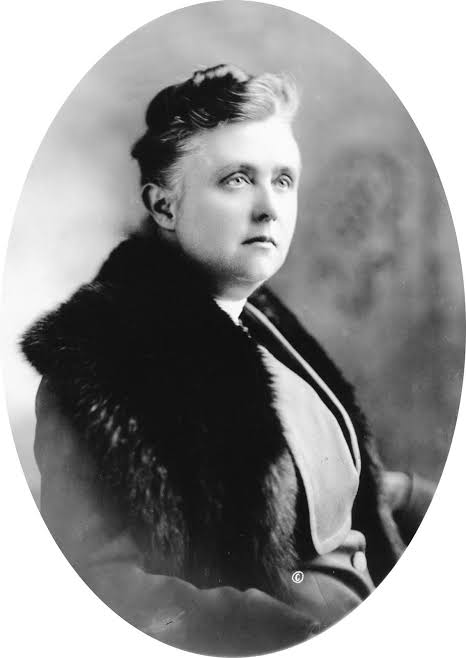 Katharine Bement Davis (January 15, 1860 - December 10, 1935) was born in Buffalo, New York, in 1860 and grew up in Rochester, establishing herself as an influential
Progressive Era figure, a pioneering professional, an innovative penologist, and an iconoclastic sexologist. She pursued an impressive academic path, graduating from
Vassar College in 1892 and subsequently earning her Ph.D. from the University of Chicago in 1900 as one of the first women in the United States to secure a social sciences
doctorate.
Katharine Bement Davis (January 15, 1860 - December 10, 1935) was born in Buffalo, New York, in 1860 and grew up in Rochester, establishing herself as an influential
Progressive Era figure, a pioneering professional, an innovative penologist, and an iconoclastic sexologist. She pursued an impressive academic path, graduating from
Vassar College in 1892 and subsequently earning her Ph.D. from the University of Chicago in 1900 as one of the first women in the United States to secure a social sciences
doctorate.
Entering the field of penal reform, Davis became the founding superintendent of the New York State Reformatory for Women at Bedford Hills in Westchester County, serving
from 1901 to 1913. There, she implemented the progressive Elmira System, focusing on individualized sentencing, education, and skill development, while employing a team of
highly educated women as psychologists and physicians to support female inmates. Continuing her trailblazing career in public administration, she was appointed in 1914 as
New York City's first female Commissioner of Corrections, where she championed women's rights, improved conditions in the correctional system, and successfully managed major
administrative challenges.
In the final decade of her active career, Davis led the Bureau of Social Hygiene, a philanthropic think tank funded by John D. Rockefeller, Jr., aimed at curbing
commercialized sex and sexually transmitted infections. From this platform, she directed a groundbreaking, large-scale scientific investigation into female sexuality. In
1929, she published her landmark study, Factors in the Sex Life of Twenty-two Hundred Women, which provided extensive statistical tables, charts, and case histories
examining the intimate lives and desires of "normal" women.
Davis's historical significance heavily intersects with LGBTQ history through both her administrative practices and her pioneering research. During her tenure at the
Bedford Hills reformatory, scholars noted her notably tolerant and progressive attitude toward same-sex relationships among inmates. Later, her 1929 sexology study
challenged prevailing cultural stigmas by exploring same-sex attraction and emotional connections between women. Her data revealed that a substantial portion of
respondents—including a significant number of unmarried and professional women—experienced intense emotional and physical desire for other women. By framing these
experiences statistically as a common and normal aspect of female sexuality rather than as an absolute moral aberration or a threat to societal values, Davis’s work helped
lay a foundational framework for modern sex research and shaped early understandings of lesbian lives before passing away in California in 1935.
References:
Other references:
- Davis, Katharine Bement. (1913). "A Study of Prostitutes Committed from New York City to the State Reformatory for Women at Bedford Hills." In George J. Kneeland (Ed.), Commercialized Prostitution in New York City. New York: Century Co.
- Davis, Katharine Bement. (1916). Introduction. In Jean Weidensall, The Mentality of the Criminal Woman: A Comparative Study of the Community Population, the Bedford Reformatory Population, the Bedford Reformatory Girl of Sixteen Years, and Women Defendants in Night Court. Boston: Educational Psychology Monographs.
- Davis, Katharine Bement. (1928). "Why They Failed to Marry." Harper's Magazine, 156, 456–463.
- Davis, Katharine Bement. (1925). A Study of Certain Auto-Erotic Practices. New York: Bureau of Social Hygiene.
- Davis, Katharine Bement. (1929). Factors in the Sex Life of Twenty-two Hundred Women. New York: Harper & Brothers.
- Jabour, Anya. (2026). Matters of Sex: Katharine Bement Davis and America's First Sexual Revolution. New York: NYU Press.
- McCarthy, Thomas C. (1997). New York City's Suffragist Commissioner: Correction's Katherine Bement Davis. New York: New York City Department of Correction.
- McKelvey, Blake. (1977). American Prisons: A History of Good Intentions. Montclair, N.J.: Patterson Smith. (Includes analysis of Davis's penal methodologies and the Elmira System).
- Sicherman, Barbara, & Green, Carol Hurd (Eds.). (1971). Notable American Women: The Modern Period, A Biographical Dictionary (Vol. 4). Cambridge, Mass.: Belknap Press of Harvard University Press. (Features the foundational comprehensive biographical sketch of Davis).
Support this project
This website is a passion project researched, developed, and funded entirely by me. If you find the content valuable and would like to help support the ongoing research and hosting costs, any contribution is deeply appreciated.
Thank you for keeping this independent resource alive!
My books on Amazon: Elisa Rolle's books
BACK TO HOME PAGE
